Showing posts with label teachers. Show all posts

Tuesday, May 14, 2013

A Teen Educator Failing Miserably


For some, I might seem confident and a bit tech-savvy.
However, with teens it seems that I'm bond to failure. That's how I feel so often. Teaching them is like a roller coaster. Yes, don't get me wrong! Sometimes I fear I won't reach them. Every time I prepare my classes I have the feeling that I'm about to fail miserably. It is like that first part of the ride in the roller coaster when you really don't know what's next and your stomach swirls.

Roller Coaster My classes are always a box of surprise. Teens never stop to amaze me when I get to that adrenaline part of the ride - being in the classroom. They are always surprising me with their wittiness, creativity, eagerness to do something different. What I've come to realize in my ride is that every time I take for granted what they like, what moves them, what ticks them, that's when I fail. There's no way out. I use the book, but I can't just follow as it is. Why? The topics are totally apart from my teens' dreams, reality, daily lives. So, just like they have to adapt to me, to my own teaching style, I must be open to adapt to them, right?

Last class, for example, I wanted to give an example on the board and invited them to give a name of a famous person. Oh my! I could see the sparkle in their eyes talking about Megan Fox and Ian-I-Don't-know-who! They wanted to show me photos, they wanted to know if I thought they were cute. And when I said they were not my style. They wanted to know who I liked. Well, "besides my husband??? Andy Garcia!" . "Andy, who, teacher?!" "Oh never mind..." This is exactly the bridge we need to cross to enjoy the ride until our next failure or until our next adrenaline rush.

So, how do you feel about teaching teens?

Thursday, March 21, 2013

Taking Learning Into a Visual Experience Through Infographics


Evolving, progressing, developing. Not always an easy task, mainly for very busy English teachers who have heavy schedules, different groups with varied age range and levels of proficiency. But still, they are up to the challenge of after a long day of work to come to a Teacher Development Course to keep improving to become for full-fledged professionals.

That's the context I have with my also challenging job of working with these teachers to raise their level of understanding of Ed Tech issues and help them learn about practical Ed Tech ideas for their classrooms. Challenging not because of the educators I have in class. They are a fantastic, enthusiastic bunch. Daring because of the responsibility of having a full month for Educational Technology in the Methodology part of the TDC program. Until last semester we'd have only a 2-hour encounter with TDC students. So, two hours turned into a fascinating monthly opportunity to inspire, go above and beyond with those teachers.

Of course, it is no easy task for them. Besides the heavy duty of going through many different concepts, ideas and practicalities of integrating Ed Tech in the classroom, they still have to deal with the hybrid format of this part of the course (1 face-to-face class + 1 online class per week) and my pushing them to do more than just average. A bit of pressure, I know, but I'm totally in awe of what I've seen so far, particularly what I had the chance to contemplate, discuss and learn about last class.

I had assigned Mark Warschauer's text "Technological Change and the Future of CALL", part of an ESL & Applied Linguistics Professional Series, "New Perspectives on CALL for Second Language Classrooms", edited by Sandra Fotos and Charles Browne. Besides classroom discussion, I wanted to profit from the elearning environment and the new trends in Ed Tech to explore the possibilities of the use of infographics in the classroom. There was a bit of whining and moaning because of the complexity of the infographics platforms and technical issues that students faced, but the outcomes were simply way more than one could ever expect...
The student-teachers found their own ways to overcome the technical challenges, and the result was a class full of sharing, discussions and considerations about CALL history, its present state and what the future holds. The infographics were the springboard that inspired us all to learn and share. One of the students, a designer by heart and profession, was even applauded by the class when he entered the room with his infographics created in Illustrator that not only visually represented the text but also enticed the readers to consider our pedagogy in the 21st century in his humorous bottom part of the infographic:

by Gustavo Dias

And here's the collective effort of the group that makes me certain that, yes, even with some pain, there was an amazing learning gain that I am super proud of. I hope that these teachers understand the power of such an activity to take their own students to another learning level. Not that they will ask students to create an infographic, but what are some of the creative practices we can adopt to enhance learning in an EFL/ESL classroom and really give choice, purpose and audience to our students' production?

If you are just curious about the infographics platforms that I suggested, here they go:


visually 
easelly
   infogram
    piktochart

Just remember that if you want to try them out, do like my students: persist!

For some cool infographics >>> http://pinterest.com/ctjonline/infographics/

Monday, October 1, 2012

Roaming Mode & Productivity Tools for Busy Educators

Educators are are always on the move. In many different ways.

In class, and according to methodology and findings in the neuroscientific field, we should move around to connect to our learners and assess their activity during the tasks.  We ask our students to do the same, moving, standing up, connecting to peers for the sake of keeping them attentive and interactive.

Many English teachers have more than one job, so they need to constantly commute to go from one class to the other, sometimes even going from one part of the city to the other extreme. Even when educators are full-time in an institution, they have to move from one class to the other, one break time to the next. Circulating is part of an educator´s daily job. An itinerant life at its best.

Peseux calibre 320 movement Not to mention our roaming mode trying to juggle the intensity of school work and our personal lives. There´s no need to say that the golden asset for an educator is time. The currency that we always lack and long for more. As there´s no magic trick to extend the number of hours we have in a day, the only viable solution is to find ways to enhance our productivity and efficiency. Educators need to realize they should be managers of their own time, and good ones!

If somebody asked me the toolkit that could optimize an educator´s urgency for better manage his life, I´d start by exploring four! Four seems to be a manageable number for exploration.
An educator´s toolkit should be composed of tools that are cross-platform (working in different devices & operational systems), so here´s where to get started:


EVERNOTE - Your virtual notebook. You create your notes, to-do lists, lesson plans and aggregate them in one single place. Once you download the app to your cellphone, desktop computer, laptop, and you create an account in Evernote, all your notes are automatically synchronized, which means that important moments, documents, ideas, and visuals are kept portable. Wherever you go, you can access them. Evernote is a powerful tool to organize your main resources, be it professional or personal, and easily retrieve them.
Check the Epic Experiment the Nerdy Teacher is doing with his students using Evernote: http://www.thenerdyteacher.com/2012/07/epic-evernote-experiment-edchat.html


DROPBOX - Your virtual flashdrive. Dropbox, just like Evernote, works in the cloud, synchronizing all the files you add to it with all your devices (cellphones, laptops, desktops). When I want to open any file in my iPad, for example, I just add it to my dropbox and open it in my iPad, using the Dropbox app. It stores all my main files and you can share folders and files with whomever you want, including your students and family members! You can share files and folders.
Here´s an example of some questions I used in class with my students: https://www.dropbox.com/s/6oy4ssy65mkf7iq/Indirect%20questions.doc


FLIPBOARD - Your virtual newsstand. My favorite app ever! It works on cellphones and tablets. What makes it a very special tool is that in one single place, you can aggregate all your social media (Instagram, Facebook, Twitter, Google Reader...), and you can subscribe to specific news feeds, specialized sites, interesting magazines to follow the latest updates. On top of it, the user experience is simply amazing. Though it can add to your productivity and keep you updated on the latest news, you can lose yourself in so many interesting, serendipitous resources that can be a drain to your lack of time. The good thing is that you can always save an article to read it later or email it to yourself and share it with friends and students.


PINTEREST - Your virtual visually-enhanced bookmark. Organize your boards by topic, start following people, grow your personal networks and let the platform and the people behind it filter relevant information for you. You can "repin" relevant resources to your own boards, you can pin interesting links and digital treasures as you browse the Net.
Here are my Pinterest boards for you to have an idea of how it works: http://pinterest.com/carlaarena/


An educator´s life is always in shifting mode, but with the mobile possibilities we have in our hands, we can better manage our routine on the go and add a more enterprising and enthusiastic feel to the many daily tasks we carry out.

I know, I know... The question is always, "From where do I start?"
First, stop lamenting the time you don´t have! Start by signing up for an account in those platforms, click and touch fearlessly, watch youtube tutorials, ask around or ask me. I´d be more than glad to give you the push you need to be a happier and more productive educator! I´m sure once you dig into your digital exploration, you´ll have a smile on your face to have worked on your own personal and professional survival toolkit.


Cross-posted at http://ctjconnected.blogspot.com.br/2012/10/productivitytools.html


Wednesday, May 2, 2012

The Social Wild Web in 2 Minutes and Teachers' Learning Brains

I've produced this quick video as a Wrap up for the online course I am teaching, Web Tools for Educators at Casa Thomas Jefferson.


In the beginning of our online session, teachers are generally in a state of lethargy and disorientation. They are never sure if they should endure in the digital experience or quit. They sometimes have a feeling of being overwhelmed, at other times, at loss... I try to show them that this a common state when we face the new, when we leave our comfort zones, when we are learning, when we are challenged.

In neuroscience there's a common term to express the exact moment when our amygdala sense danger:
FLIGHT - FIGHT - FREEZE
We generally react in these three ways: we can just run away from the new experience as we feel threatened, we might decide to persist and move on against the initial moment of fear and helplessness, or we can just be in a lethargic state of no-action. 

My role as an online facilitator is to give participants the support they need for them to build up their self-confidence and move forward, fighting against their initial disorienting feeling of the non-linear digital world. Isn't that what we all try to do with our students, anyway? In this case, though, it is an even more important mission, for if they see the power of the Social Web in transforming their classrooms and beyond in truly student-centered learning hubs where interaction, collaboration, problem solving, creative thinking, fun-based learning is part of class routine, then my special assignment as an online facilitator is accomplished, and the impact of teachers' newly acquired digital skills is long-lasting and amplified in their local educational communities. 

That's why when they overcome the initial stage of getting their feet wet into learning how to participate in an online community, enhanced by numerous digital tools, they get into the experimentation level, evolving to many WOW moments throughout our 10-week online session and way beyond. 

Of course, there are those who always fly, and those who get stuck, freezing, no matter what you try to do  to give them the support they need. Educators must first re-learn to unlearn. Educators must be open to learning if they want to be part of education. However, what really makes a difference is letting our brains work in our favor, when we fight against the initial fear and sense of being in danger, for endangered professionals are the ones who are not open to movement, change and action.

by Fabrício Freire_WebTools4Educators

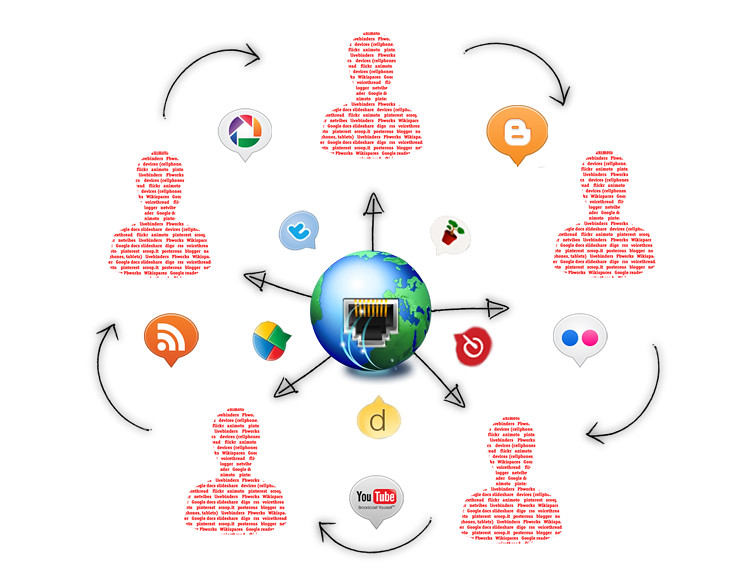
The Social Web is full of encounters, learning and networking. And every educator should be part of it in very meaningful ways, and that's why it is part of my job to introduce the educators who start the Web Tools for Educators course to get there in the SOCIAL WILD WEB!


Tuesday, August 23, 2011

Three Powerful Mantras for Tired Teachers

We can easily picture educators who suffer from an ongoing, cronic burnout. No motivation, no strength, happiness in the eye, passion. Many become the complainers, resistant, tired souls that simply let life pass by, waiting for the day they can retire.

I'm an optimist at heart and truly believe that if one decided to become an educator, there's always a passionate soul that is dormant somewhere out there. It is just a matter of refocusing, finding a new purpose, meaning to what we're doing. It's about finding opportunities to ignite that passion again.

Rouge Passion

These are, then, my three mantras for those who have no escape but to seize the day, become happier, self-fulfilled educators touching students' lives in very meaningful ways:

1. Learn, learn, learn something new                                      
In my case, I've decided that this is the QR-Codes month. I want to test pedagogical uses for them with my adult group. I've read about it, asked around, saw videos, and checked wonderful PPT with educational ideas for them.
So, just set up a XXXXX month. What are you going to focus your learning efforts on this month?

2. Try, fail, try again in class                                                     
Learning is not enough. Practice really makes perfect. Test with a plan.
I learned about QR-generators and found powerful free QRreader apps to encourage my students to download them.
I planned a shopping activity with QRCodes to practice talking about things that are too expensive and a bargain.
I invited my students to download the app to their cellphones (I gave suggestions for either Apple and Android smarthphones)
I feel ready to try. Here are the colorful QRcodes I prepared for the activity.
https://docs.google.com/document/pub?id=1_N-ykajXMynurxERnk3E3ZBAkjt-b6JDUBMwn6fkTBg 


3. Share, share, share your successes and failures                  
I'm already sharing my ideas here with you, but I still want to go beyond and share how the activity went once I get my feet wet with my students. Can't wait!

What would be your mantras to keep your passion for teaching and learning alive?