I met Jamie Keddie, from the very resourceful site, lessonstream, in Brighton, on my very first day at IATEFL 2011.
He was part of my Twitter network and, at the pub we were at, he just said, "I'm that guy with the dog as a thumbnail". Yes. Everything about Jamie has a visual cue!
However, his very recent video goes much beyond imagery. It helps us picture a scene through words in the very best Jamie style of storytelling with a strong visual reference.
This video is a very powerful resource for the classroom as there are just so many things that can come out it:
- A discussion about the wall he talks about and the kinds of imaginary walls and real ones we have around us.
- Students drawing the scene and trying to identify where, who, what he is looking at if they haven't heard of or seen the photo.
- A discussion about cultural issues that have caused or might cause a rebellion.
- Or how about the students recording their own picturetelling videos, inviting others to draw what they narrate?
Well, I'll leave you with Jamie, his video and a great lesson plan to go with it!
http://lessonstream.org/2013/06/11/gezi-park/

An exploratory journey of an educator who thrives for meaningful conversations. Lifelong Learning, Education, Ed Tech, Change.
Showing posts with label culture. Show all posts
Showing posts with label culture. Show all posts
Tuesday, June 11, 2013


Sunday, May 27, 2012
Stereotypes - Controversial Topic to Raise Cultural Awareness
Much has been said about the dangers of generalization and stereotypying a certain group of people. Now, how do we approach it in the classroom?
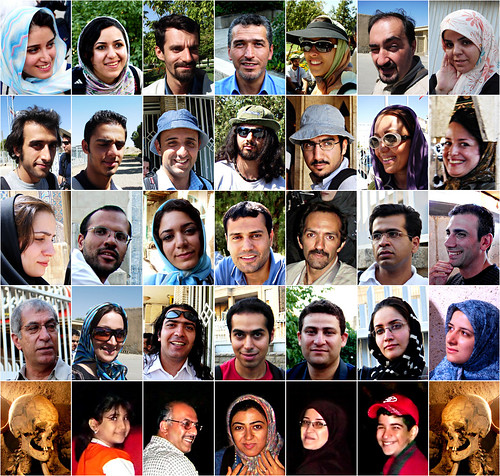
Here's a lesson plan I've used it in the past with my groups. The first part is adapted from http://the_english_dept.tripod.com/stereo1.html
Choose two adjectives that you think describe different nationalities.- punctual
- tolerant
- romantic
- respectful
- hard-working
- emotional
- aloof
- mean
- honest
- ardent
- organized
- outgoing
- nationalistic
- well-dressed
- humorous
- lazy
- sophisticated
- friendly
- tedious
- systematic
- chaotic
- unpleasant
- aggressive
- polite
- rude
- arrogant
- ignorant
- casual
- refined
- reliable
- careless
- unstable
- dull
- disciplined
- hospitable
- talkative
- sociable
- serious
- quiet
- formal
- passionate
- tender
- uninsterested
- cold
- negligent
- untidy/disorganized
- messy
- punctual
A- Warm -up
- I show them photos of people that seem to come from a certain country and ask them to speculate where they are from and why they think they are from that nationality.
- They share their ideas with the group.
- Students group the adjectives above under categories (taste, attitude, feelings, organization, etc) and indicate which are positive or negative traits. Ask them to use the dictionary for unknown words.
B - Vocabulary Practice
In groups, students complete the sentences with the adjectives listed above.
The British are regarded as being...
The French are portrayed as being...
The Germans are considered as being...
Italian men have a reputation of being...
The Swiss are said to be...
The French are portrayed as being...
The Germans are considered as being...
Italian men have a reputation of being...
The Swiss are said to be...
Brazilians are considered to be...
C - Discuss
1) Students regroup and compare their answers to see if they have come to the same
conclusion. Share with the class.
2) Brainstorm
common stereotypes that they have heard people use.
3) Questions to students:
- Was it easy to complete the sentences? Did your answers come naturally? Why? Why not?
- Did the completed statements make you feel uncomfortable? Why? Why not?
- In general, were your responses positive or negative?
- List the stereotypes under positive, negative or neutral. What does this tell us about stereotypes?
D - Expansion
Fill in the
following questionnaire on your own and later discuss it with your teacher and
colleagues. You may use :
A= I agree B= I'm not sure C= I disagree
A= I agree B= I'm not sure C= I disagree
- National stereotypes are dangerous because
they may provoke racial prejudice.
- Stereotypes contain a certain amount of truth.
- There is no such thing as national character
and therefore the idea of national stereotypes is rubbish.
- The reason stereotypes exist is because people
are afraid of diversity, change, and what is unknown. They prefer to cling
to simple classifications, which maintain an old, familiar and established
order.
- Stereotypes are simply harmless sorts of jokes
we tell about other nationalities or groups of people.
E - Further Discussion
- What is, in your opinion, the best way to challenge a stereotype.
- What you have seen here are national stereotypes. Can you think of other kinds of stereotypes?
- What are the stereotypes about your own culture, nation, or people? Are they true? How are these stereotypes different from your own reality? What are your impressions about the Brazilians?
F - Global Voices
Students listen to people discussing about stereotypes about their countries.
Then, they might join a Voicethread discussion:
Or they can create posts trying to demystify common stereotypes about their countries, ilke this example from my students:
http://brazilandbrazilians.blogspot.com.br/2005_09_01_brazilandbrazilians_archive.html
UPDATE:
Check the international project that was the kick off for the original lesson plan, created by Barbara Dieu.
http://the_english_dept.tripod.com/projects/files/timeline03.htm
Finally, tell students the true nationalities of the people portrayed in the photos they guessed in the beginning of the class.
Check the international project that was the kick off for the original lesson plan, created by Barbara Dieu.
http://the_english_dept.tripod.com/projects/files/timeline03.htm
Tuesday, April 3, 2012
Making Waves and Culture Gone Digital
It is pure redundancy to say it, but the best part of joining a Conference like TESOL is really weaving and threading what you want to learn, your curious mind to the connections and networking that take place.
This TESOL was no different. Besides meeting my dear old Webheads community, I had the chance to revolve around the Electronic Village wonderful ideas and people excitedly presenting about their projects, ideas, developments and apps they've been trying out.

Also, it gave me immense pleasure to present twice in totally different topics that converged, though, into one idea: the idea of Culture.
In Cultural Expeditions Gone Digital, part of the Intersections colloquium, I tried to explore with the audience some ways in which educators could enhance their culturally-smart classes through the wonders of cultural richness provided by exciting digital possibilities. Besides the cultural immersion through digital resources, I've shared some practical ideas for the classroom.
Here's the slideshow and all the references are available at http://brazilbridges.pbworks.com/w/page/51986293/Cultural%20Expeditions
In an another session, I've explored the idea of the new paradigms of the culture of Professional Development, not institutionally-bound anymore, but, in fact, self-directed and self-assembled through the possibilities provided by the digital world in a sustainable model of continuous evolvement of our own PD. All of that in big waves of micro-revolutions, those that we are the holders of our own professional destiny in a connected realm of people, networks, and nodes of learning.
All the references are at http://brazilbridges.pbworks.com/w/page/52460489/Making%20Waves
Tesol12 Making Waves Through Online Circles of Learning
View more PowerPoint from Carla Arena
All in all, it was inspiring to be at TESOL to see what other professionals are up to. I just wish some would take more time learning about how to best present their messages...but this would be for another post!
All in all, it was inspiring to be at TESOL to see what other professionals are up to. I just wish some would take more time learning about how to best present their messages...but this would be for another post!
Tuesday, August 30, 2011
Culture Gone Digital
To champion the selfless acts of others. This is the motto of a great site to explore the wonders of different cultures around the globe. http://explore.org is a "multimedia organization that documents leaders around the world who have devoted their lives to extraordinary causes. Both educational and inspirational, explore creates a portal into the soul of humanity."
Through powerful videos and photos, an educator can bring a whole new, fresh cultural perspective to the classroom. What I love about Explore besides all its culture richness? The fact that you can watch any video in a tablet. m-Learning at its best! Can you imagine a classroom activity in which every student can learn about a specific cultural aspect in different countries and then share their findings with peers?

Through powerful videos and photos, an educator can bring a whole new, fresh cultural perspective to the classroom. What I love about Explore besides all its culture richness? The fact that you can watch any video in a tablet. m-Learning at its best! Can you imagine a classroom activity in which every student can learn about a specific cultural aspect in different countries and then share their findings with peers?
Another great place for cultural explorations? Pocketcultures, a place made of the views of expats in foreign lands, as well as the natives' perspectives. It ranges from posts about people, interesting blogs, to cultural curiosities. The world in Pocketcultures is at the tip of your fingers and your students' . Don't miss the chance to connect language with a cultural touch to promote better understanding, awareness and tolerance among people.
Friday, December 19, 2008
The Flickr Love Project
More than words, I think the slideshow depicts how a fantastically simple idea can be of a huge impact for people. The Flickr Love Project is such an amazing example of a connector.
You send a Flickr Mail to Keiko, a sweet Japanese girl, and she sends to you hearts in an envelope. The only thing you need to do? Take a heart photo, spread love and share it with the group.
Simply that. The result? Powerful. Joy, sense of belonging, sharing, enjoyable moments, and way beyond.
As an educator, I can't resist it! I think this idea is one that could be used with any kind of object to connect classes around the world. I've been part of a Teddy Bear project with kids, and I now can picture a new twist to it by connecting classes via Flickr as the Teddy travels the world. It can be a simple paper Flat Stanley or monster.
Also, the guys at the Photo Fridays Group is doing a similar exchange with some raisins. Really cute.
I can picture some very nice and effective collaborative projects happening using Flickr, snail mail and an object to connect people and raise more cultural awareness, tolerance, peace...
Subscribe to:
Posts (Atom)