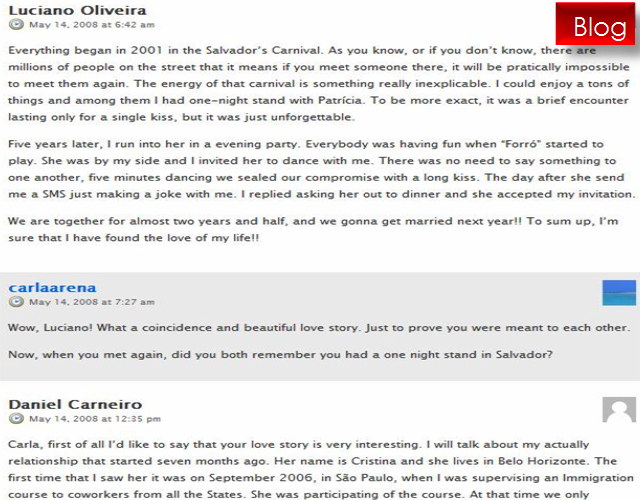
They listened to a story of how a teacher met her husband.
Then, they wrote about their own love stories.
I realized the lesson plan could be even richer if there were other stories from around the globe.
Once again, I invited my network to collaborate with me so that my students could hear love stories from different parts of the world. Here's this multicultural stories mosaic:
How about inviting your students to tell their own love stories or asking them to interview a member of their family to report to the group about their love stories?
Choose two adjectives that you think describe different
nationalities.
punctual
tolerant
romantic
respectful
hard-working
emotional
aloof
mean
honest
ardent
organized
outgoing
nationalistic
well-dressed
humorous
lazy
sophisticated
friendly
tedious
systematic
chaotic
unpleasant
aggressive
polite
rude
arrogant
ignorant
casual
refined
reliable
careless
unstable
dull
disciplined
hospitable
talkative
sociable
serious
quiet
formal
passionate
tender
uninsterested
cold
negligent
untidy/disorganized
messy
A- Warm -up
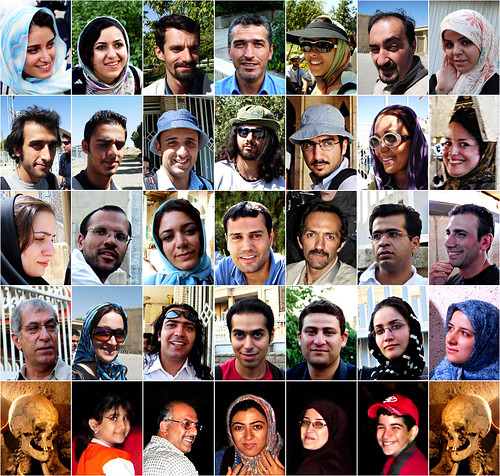
I show them photos of people that seem to come from a certain country and ask them to speculate where they are from and why they think they are from that nationality.
They share their ideas with the group.
Students group the adjectives above under categories (taste, attitude, feelings, organization, etc) and
indicate which are positive or negative traits. Ask them to use the dictionary for unknown words.
B - Vocabulary Practice
In groups, students complete the sentences with the adjectives listed above.
The British are regarded as being... The French are portrayed as being...
The Germans are considered as being...
Italian men have a reputation of being...
The Swiss are said to be...
Brazilians are considered to be...
C - Discuss
1) Students regroup and compare their answers to see if they have come to the same
conclusion. Share with the class.
2) Brainstorm
common stereotypes that they have heard people use.
3) Questions to students:
Was it easy to
complete the sentences? Did your answers come naturally? Why? Why not?
Did the completed
statements make you feel uncomfortable? Why? Why not?
In general, were
your responses positive or negative?
List the
stereotypes under positive, negative or neutral. What does this tell us about
stereotypes?
D - Expansion
Fill in the
following questionnaire on your own and later discuss it with your teacher and
colleagues. You may use :
A= I agree B= I'm not sure C= I disagree
National stereotypes are dangerous because
they may provoke racial prejudice.
Stereotypes contain a certain amount of truth.
There is no such thing as national character
and therefore the idea of national stereotypes is rubbish.
The reason stereotypes exist is because people
are afraid of diversity, change, and what is unknown. They prefer to cling
to simple classifications, which maintain an old, familiar and established
order.
Stereotypes are simply harmless sorts of jokes
we tell about other nationalities or groups of people.
E - Further Discussion
What is, in your
opinion, the best way to challenge a stereotype.
What you have seen
here are national stereotypes. Can you think of other kinds of stereotypes?
What are the stereotypes about your own culture, nation, or people? Are they true? How are these stereotypes different from your own reality? What are your impressions about the Brazilians?
F - Global Voices
Students listen to people discussing about stereotypes about their countries.